

By Franco Caporale, Founder of SaaSMQL
Everything you're about to read comes from work — not theory. Over the last eight years running SaaSMQL, I've worked with more than 100 B2B SaaS companies on their ABM programs. Before that, I spent a decade leading demand generation at four VC-funded startups in Silicon Valley, running programs with my own budget and my own pipeline number on the line.
Across all of that work, I've seen the same mistakes come up over and over. Different companies, different industries, different ACVs — but the same predictable set of execution errors that quietly kill programs before they have a chance to work.
ABM works. The strategy isn't broken. What breaks programs is a set of pitfalls most teams can't see because they're too close to the work. Here are the 10 most common ones I see, plus one bonus that ties everything together.
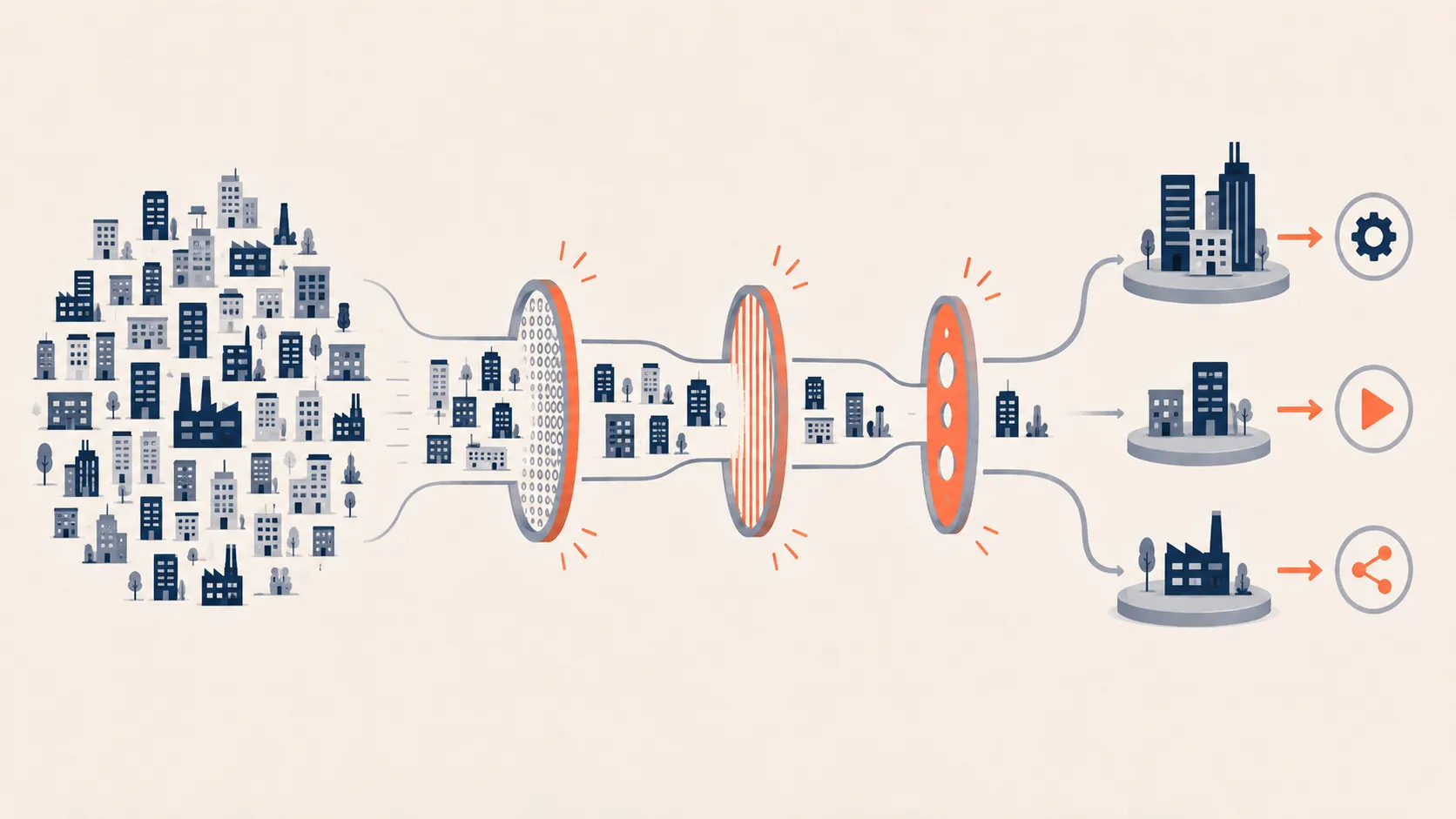
TAM → account segments → data orchestration → custom workflows. Most companies skip the last two.
This is the biggest one, and it's the foundation of every ABM program that fails. Most companies think they're segmenting because they have a target account list. They're not. A list of accounts you'd like to close is a reference table. It's not segmentation.
Real ABM segmentation is a three-step process. You start from your TAM — your total addressable market. You then develop segments in multiple ways: by tier, industry, product, funnel stage, deal size. There's no single correct axis, and with enterprise companies it gets genuinely complex. Then you run the data through orchestration — validating it, filling gaps between accounts and contacts, matching cold and warm intent signals to the buying group. Only after all of that do you build the custom workflows that activate each segment.
If you skip orchestration and workflow design, you're left with a spreadsheet. Not an ABM program.
Here's a story that illustrates why this matters. A prospect recently came to us wanting to launch an ABM strategy. They had already decided everything: 25 target accounts, all cold — no prior intent signals, no relationships. When we dug into deal size, the potential ARR per account was under $20K.
We ran the math, which is what we always do at the start of any ABM plan. For each segment you put the accounts into a spreadsheet, model conversion rates at best-case and worst-case, and calculate potential ROI. The numbers weren't there. Even at the best conversion rate we could hope for, the effort and budget required to build custom campaigns for 25 cold accounts couldn't be justified by a $20K deal size.
ABM probably wasn't the right strategy for those accounts at all. But more fundamentally — if your deal size is $20K a year, you can't have a segment of only 25 cold accounts. You need hundreds of accounts per segment for the math to work. Each custom workflow takes time, effort, budget, and focus, and you build it to generate ROI — not to burn months on 25 accounts that aren't worth much to begin with.
TAM. Segments. Unit economics. Most companies skip the first two — and then wonder why the third one doesn't work.

If you're launching an ABM strategy and the first thing you do is build a list of net-new logos, you're leaving money on the table. Every single one of them.
I say this all the time — not 99% of the time, 100% of the time. Every client and every prospect we talk to is sitting on a mountain of data in their CRM, marketing automation, HubSpot, Marketo, Salesforce. Previous engagement. Warm accounts. Warm contacts. Intent signals from the website. Content downloads. Event scans. Old sales conversations that went quiet. Every single one of those is a potential opportunity.
And here's what makes it worse: that data doesn't stay warm forever. It goes stale. The champion who downloaded your whitepaper six months ago moves to a different company. The lost opportunity from last year finds a workaround. The demo no-show forgets you exist. Every month you spend chasing cold accounts, the warm pipeline you already have gets colder.
At the beginning of any ABM strategy, before you touch cold accounts, ask:
Then build a workflow that activates that warm layer first. You'll see ROI in weeks, not months, and that momentum funds the cold work later.
Cold accounts matter. They're often exactly the accounts you want to win. But going after them first, while ignoring the warm data already in your CRM, makes a real difference in what your first four to six months of ABM ROI looks like.
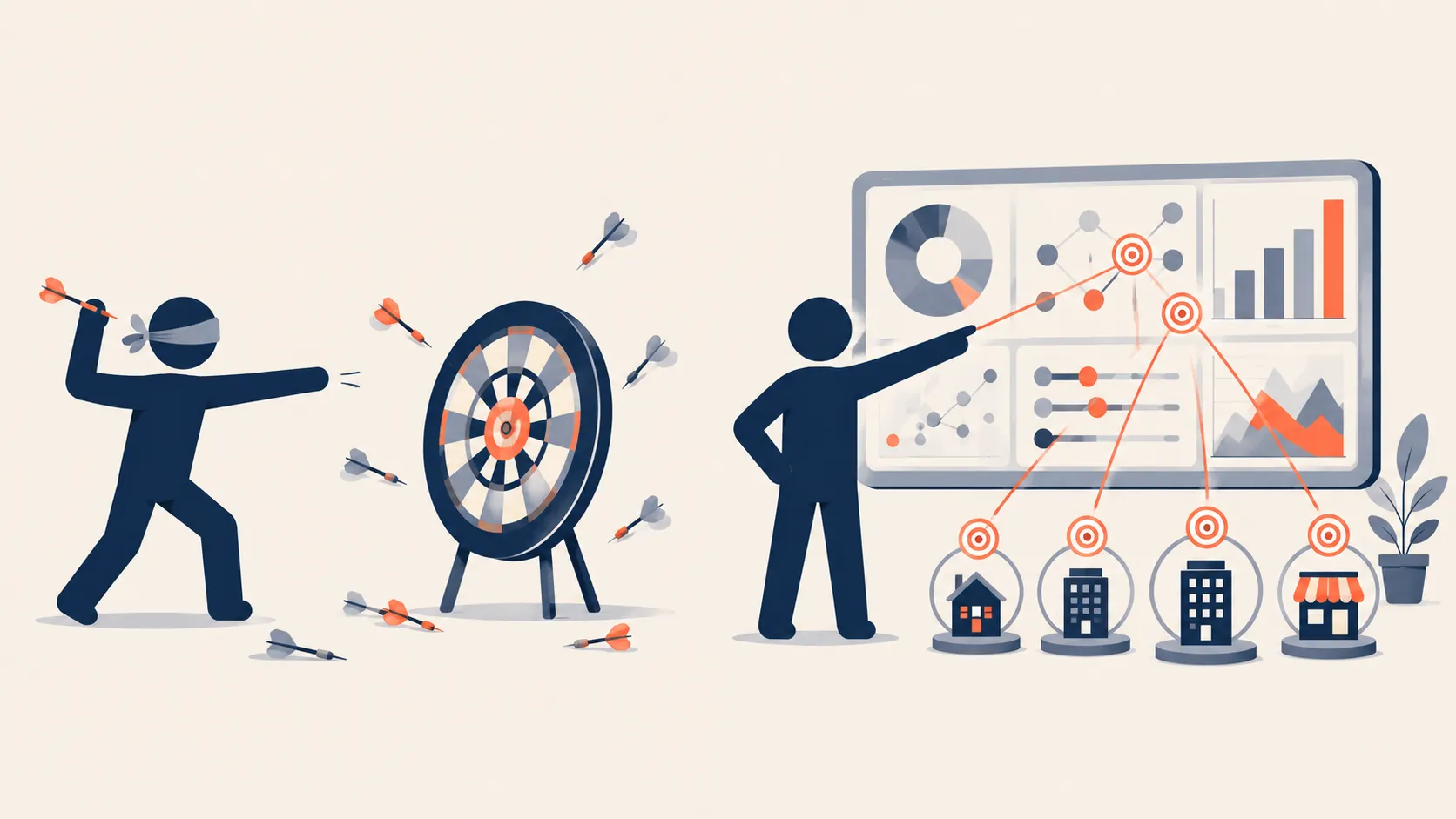
I've seen this many times. Sometimes the selection is fine. But I've seen plenty of cases where the sales team was picking accounts that had no business being on a target list, and the only reason those accounts were there was because a sales rep had some relationship with an economic buyer inside them.
That's not a target account. That's a relationship.
Marketing and demand generation teams sit on data sales doesn't have. We're crunching hundreds of thousands of records — sales activity, historical pipeline patterns, intent signals, firmographic fit, technographic data. That's the raw material for a real ICP definition, and it's what should drive account selection.
That said, this shouldn't happen in a silo. My goal is always this: if we generate a meeting from a target account, the AE should be genuinely excited to take that meeting. If they're not, something is wrong in the selection process. The AE has a quota to hit, so their input matters — but their input is not the same as their decision.
The right split: demand gen owns the selection, sales gives input, both sides align on the criteria before the list is finalized. That way you get the analytical rigor of a data-driven ICP with the ground-truth signal only sales reps can provide.

I see this a lot, especially with high-touch channels — direct mail, VIP events, custom dinners, invitations to ballgames. Everything gets pointed at the economic buyer. The person who signs the contract.
From an ABM perspective, that's backwards. The person who makes the deal move is almost never the economic buyer. It's the champion. It's the power user. Those are the people who fight internally to get to signature, who shape the deal, who fight off competitors during evaluation.
The economic buyer often won't even take your meeting. They'll hear about your solution from their team member — the one who did the research and knows every detail. That person makes the case internally. If the case is strong, the exec signs.
So when you're trying to drive that first meeting — the discovery call, the initial conversation — pointing your best campaigns at the economic buyer is the wrong strategy. Ninety-nine percent of the time, they won't take that meeting anyway.
Here's what works instead. When you build the buying group for each target account, don't guess. Go to your CRM and pull closed-won deals. In Salesforce, run the Opportunity with Contacts report. For every closed-won deal, identify the first person who engaged — the one who requested the inbound meeting, replied to the outbound email, came to your booth at an event. That's your entry point. That's the persona you need to target first in every future ABM play.
Then map the other people who came into the deal later — the champions, the power users, the technical validators, and yes, the economic buyer at the end. That's your buying group. Not "VP of Finance, VP of HR, CRO, CMO" pulled from a title list. The actual sequence of humans who close your deals.
Many times, the entry-point titles are ones you weren't planning to target. That's the whole point of doing this analysis — you're replicating what works, not inventing what you hope will work.
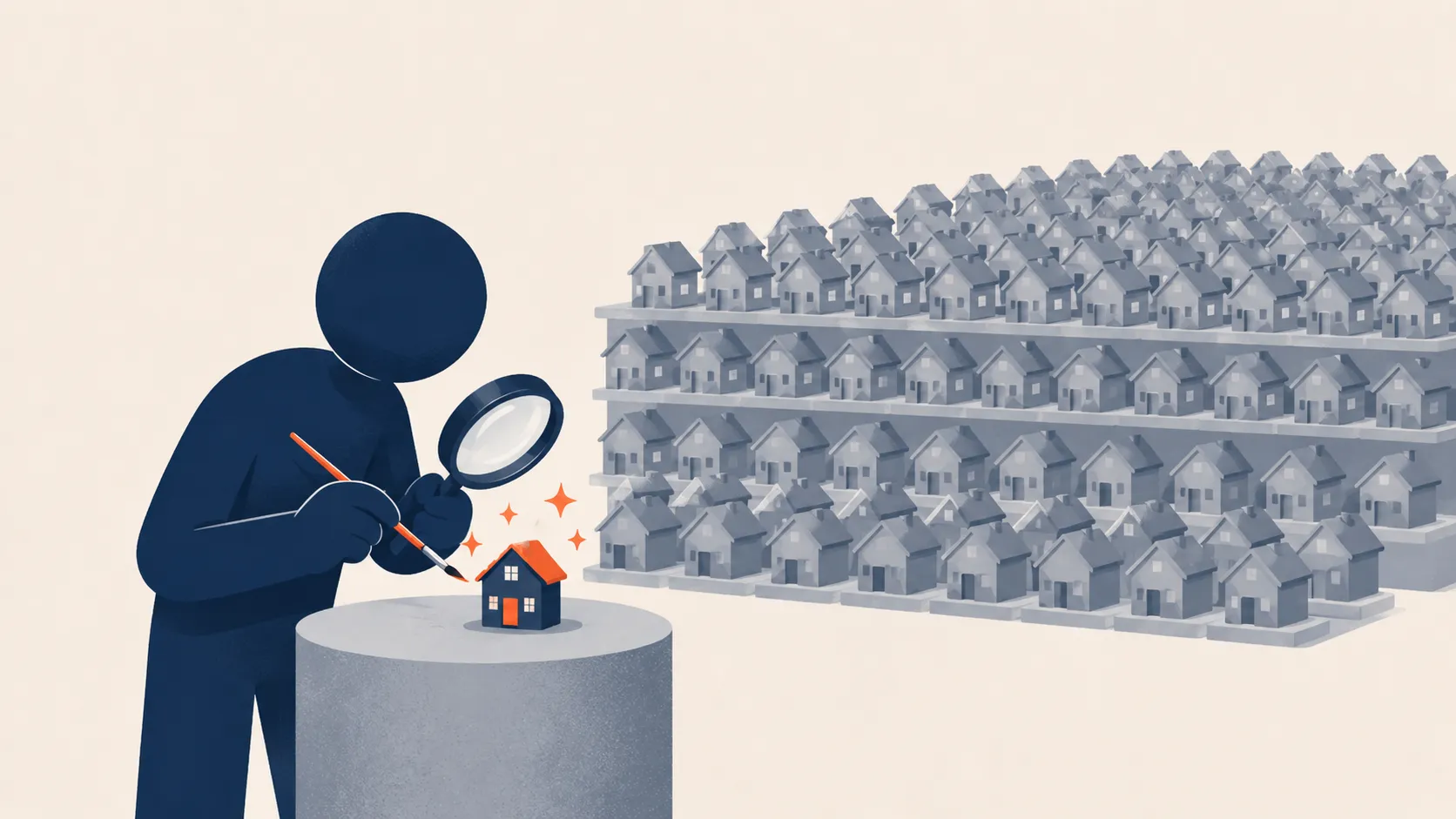
For some people, ABM still means one-to-one campaigns. One account, custom-built everything. Say your target is Bank of America. The landing page is custom for Bank of America. The email sequences are custom for Bank of America. The direct mail assets are custom. The banner ads are custom. Everything.
That can be a valid strategy — but go back to Pitfall #1 and run the math. If you're pouring resources into custom assets for a single account, that account either converts or it doesn't. You get 100% or 0% on that segment. So the deal better be worth $1M ARR or close to it. Definitely no less than half a million. Below that, the math doesn't work.
I wouldn't put a full custom-build effort into a deal that's going to close at $80K. That's just perfectionism dressed up as strategy.
You can have segments of 4, 5, or 10 accounts. You can have segments of 100, 500, or 1,000. That's the classic one-to-one, one-to-few, one-to-many framing you hear all the time. In practice, the vast majority of campaigns we run are one-to-few and one-to-many. One-to-one is rare, and it's only worth it when the ACV justifies it.
The other flavor of this pitfall is the minutia. Teams lose weeks — sometimes months — debating paper stock on direct mail, banner ad color palettes, email subject line tweaks. Those decisions matter. But they don't matter enough to delay a campaign by six weeks. I've watched teams waste months on this kind of polish, and the cost is always the same: no pipeline while the perfectionism runs its course.
When you build segments, the accounts don't need their names on the landing page. They don't need "Hi John" at the top of the banner. What makes a campaign relevant isn't personalization at that level. It's whether your solution speaks to a problem those accounts actually have right now — a problem that's common across the whole segment. That's what makes the messaging land. Not the recipient's first name in the header.

This connects back to Pitfall #3, but it goes deeper than account selection. Real alignment covers the entire motion — how the campaign runs, what the workflow looks like, when sales is expected to take action, how the handoff happens.
If your sales team doesn't even know you're running the campaign, you'll hit a wall early. You don't need the whole team in the room — if you have 20 AEs and 30 SDRs, that's overkill. But you need at least one representative from sales embedded in the program:
Concretely, sales needs to know: when do they follow up with target accounts, what actions to take at each stage, and what to avoid doing (because you might have automation running that they'd otherwise trip over).
All of this needs to be clarified at the beginning of the program, not once the campaign is live. And I use the word program deliberately — not campaign. That distinction matters, and I'll come back to it at the end.
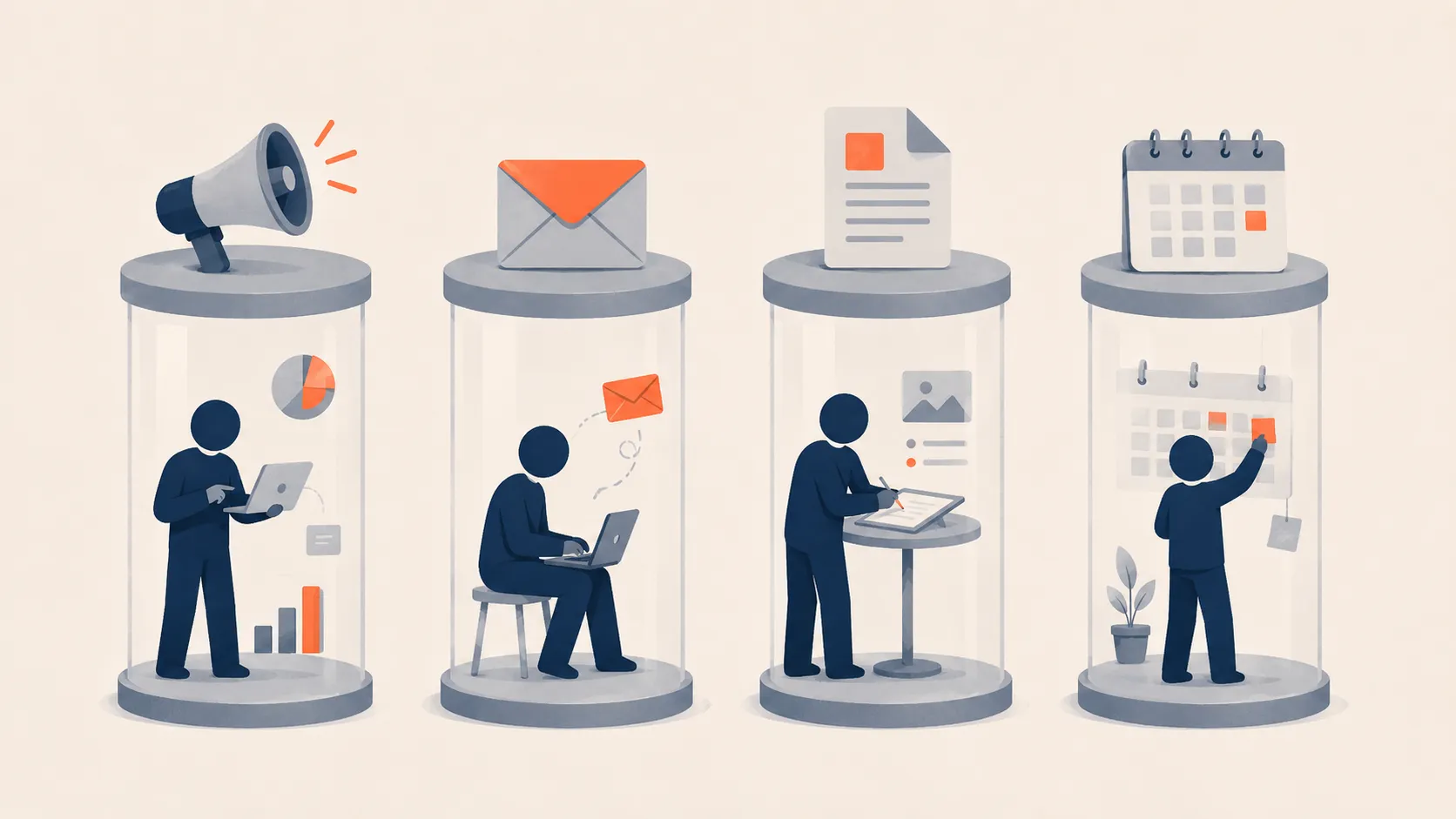
At SaaSMQL, we treat ABM as multichannel by default. When channels run in silos, they don't compound — and compounding is where ABM actually generates ROI.
Picture the alternative. You have a list of 300 accounts, carefully segmented, clean data, validated buying groups. You launch the program. Suddenly those 300 accounts and their decision-makers start seeing your company everywhere. They see your ads on LinkedIn. They get an outbound email. A physical package shows up at their office. They go to an industry event and you're there. They get invited to a custom happy hour or VIP dinner. All of it happening at the same time, across multiple channels, with coherent messaging that's aligned and relevant to them.
That's when engagement compounds. That's when you see real conversion rates and your cost per opportunity drops.
If you're just sending emails, or just making calls, or just running direct mail, or just running ads — the conversion rates are always weak. And every silo is optimizing for itself, not for the account.
The other benefit of coordinated multichannel is that once you build these workflows, you can optimize them over time. You cut a step here. You A/B test messaging there. You add a channel that's working, remove one that isn't. Each iteration makes the system sharper. Silos don't get sharper. They just get more expensive.

This is one of the most expensive pitfalls, and it connects directly to what I said about warm accounts in Pitfall #2. A lot of companies are sitting on a goldmine of intent signals — website visits from target accounts, content downloads, tradeshow leads, demo no-shows, closed-lost opportunities from six or twelve months ago. And most of that data goes nowhere.
Here's what I mean. Say someone from Adobe visits your website. Adobe is on your target account list. Your dashboard shows the visit. You feel good about it — "great, we got a hit from Adobe." Then what?
Do you have a workflow that retargets anonymous web visitors by pulling the right buying group contacts from that account? Do you have specific messaging sequenced across channels to activate that signal? Or are you just looking at the dashboard?
If there's no action, no piping between the signal and a workflow, you're losing them. Six months from now that signal will be irrelevant, and you'll be building new ones from scratch to replace the ones you never used.
Every intent signal needs a custom workflow attached to it. And they're not all equal — some signals are dramatically higher-value than others, and those are where you start.
Two quick examples of high-value signals that most companies underuse:
A one-off is not a workflow. They're two different things, and they don't compound because you can't optimize a one-off.

When you launch an ABM pilot — testing new channels, new strategies, whatever it is — there's a constant risk of running it too small, too short, or cutting it too early. It's the same mistake companies make with paid ads: spend $100 on Google, get zero out of it, conclude "Google Ads doesn't work for us." The budget was too small to draw any real conclusion.
Same thing happens with ABM channels. I see companies spend $1,000 or $2,000 on LinkedIn ads — an expensive channel — and cut it when they don't see opportunities. Or send 50 pieces of direct mail and try to draw insights from that. Those are pilots too small to conclude anything.
Sometimes the problem isn't even that the pilot was too small — it's that the attribution was broken. A few years ago I had a client who cut LinkedIn ads because they said the channel wasn't generating ROI. They'd spent about $80K the year before. When we dug into their LinkedIn engagement and opportunities data in Salesforce, we discovered that $80K had actually driven over half a million in recurring revenue. It just wasn't connected properly from an attribution standpoint.
The lesson: before you cut a channel, make sure your pilot was big enough and long enough to produce a real signal, and make sure your attribution model can actually see the impact. Otherwise you're making expensive decisions on incomplete data.

At the start of an ABM program, if you're only tracking closed-won deals, you're going to make bad decisions.
Depending on your sales cycle, it can take months for the first pipeline to show up. In the meantime, you need leading indicators — things that tell you the program is working before deals close:
These matter especially when you're targeting cold accounts. At the beginning, you're not necessarily trying to book meetings on day one — you're trying to get target accounts aware of you, coming to your website, reading your content, becoming familiar with the category and your positioning. Because when their internal timing shifts — when they finally have an initiative to solve the problem you solve — you want to be on the shortlist.
If your leading indicators are moving in the right direction, don't kill the program just because you haven't closed a deal yet. That's how you end up starting from scratch six months later with nothing to show for the investment.

This is the most important pitfall on the list, which is why I saved it for last.
A lot of companies run ABM as a one-off campaign. Sales and marketing come together, pick a theme, target specific accounts, build custom marketing assets. Everything is aligned — the branding, the colors, the messaging. Months of work from many people. It shows really well in slides at the board meeting. It's a great presentation. But that's not ABM.
ABM ROI shows up when you build a system that compounds. Workflows that are live and running in the background continuously, that you optimize month after month, quarter after quarter.
Concretely, what that looks like:
All of these need to be live and always-on. Not a one-off you run after an event because someone in the C-suite decided you should do "something ABM." One-offs don't compound. Systems do.
We have clients with the same workflows running for two and a half years, three years, and longer. We've optimized them, tweaked them, updated the messaging — but the backbone is unchanged, and they generate opportunities in a predictable way, quarter after quarter.
That's where you want to arrive. That's the goal.
Across more than 100 B2B companies, the teams that get ABM right share the same patterns:
If any of these pitfalls feel familiar — if you're looking at your own program right now and recognizing two or three — you're not alone. Almost every program I've audited has fallen into at least a few of them. The fix is rarely a bigger budget or a new tool. It's usually a step back to the fundamentals: segmentation, unit economics, data flow, and the discipline to treat ABM as a system.
If you'd like to talk through your specific program, reach out at franco@saasmql.com or find me on LinkedIn. We work with B2B companies to build ABM programs that avoid these traps — and to fix the ones that have already fallen into them.
Franco Caporale is the founder of SaaSMQL, a B2B ABM consultancy that has helped more than 100 SaaS companies design and scale account-based marketing programs. Before SaaSMQL, Franco led demand generation at four VC-funded SaaS startups in Silicon Valley.

SaaSMQL is an Account-Based Marketing agency that helps SaaS companies scale recurring revenue with high-impact multichannel campaigns.

.png)
