

By Franco Caporale, Founder of SaaSMQL
A SaaSMQL guide to high-impact direct mail for B2B SaaS.
The channels that used to drive B2B sales pipeline are getting harder to rely on. In 2018 or 2019 you could scale a SaaS business to $50M+ ARR almost entirely with an SDR team doing cold emails on Outreach or Salesloft. That no longer holds: cold email has largely stopped working as a standalone channel, and paid ads have become more expensive as competition on LinkedIn and AdWords has increased. Prospects have learned to tune out a crowded inbox (helped by AI filters) and to scroll past ads. So the question many teams are now asking is where attention actually still exists.
This is part of why we're seeing more inbound interest in B2B direct mail, and part of why it works. Consider how many custom boxes a senior decision maker at an enterprise actually receives from SaaS vendors each year. Even the most sought-after buyers get maybe four or five genuinely nice, branded packages in a year. Most get none. Over my 16-year career overseeing demand generation for VC-backed software companies, I've received two pieces of direct mail from vendors, and I became a customer of one of them. A well-executed box breaks through the noise that email and ads can no longer cut through, and it sets you apart from competitors who are all crowding the same two or three channels.
The reason more companies don't do it is simply that it's very complex to execute. A direct mail campaign is far more work to put together than an email campaign, with dozens of moving parts to coordinate. Most marketing teams treat it as “gifting”: they choose an expensive item, place it in a plain box, ship a few hundred, and measure the results against the cost of the gift. When the pipeline doesn't follow, they conclude that direct mail doesn't work.
In our experience running these campaigns for SaaS companies, the outcome has very little to do with the gift. It depends on the system around it: the target segments, the data, the orchestration, the triggers, the flow, and the follow-up. What follows is how we think about each of those pieces.
Before deciding what to print, send, or design for your direct mail campaign, it's worth understanding who you're reaching and why. Where does each account sit in the funnel? What context do you already have on them? Have they engaged with you before, or are they cold?
Direct mail is most effective when the segment is defined first and the creative is built to fit it. The reverse, designing a box and then looking for people to send it to, tends to produce an impressive package aimed at the wrong audience or with an irrelevant call-to-action.
In most B2B accounts, the decision involves several roles, so a single box to a single contact leaves most of the account untouched. A more complete approach is to map the buying group and match the direct mail concept to each tier:
This lets you reach every relevant role in the account while allocating budget deliberately, rather than spending the same amount on everyone. This will help reduce your CAC and maximize pipeline generation with the same budget.
There's a meaningful difference between dropping a gift in a plain, unbranded box and designing a piece of direct mail. In the first case, the box is just packaging. In the second, the box is part of the message. The outside should carry your branding and a headline that communicates something before it's even opened, and the inside should be designed as an experience, what we refer to as the unboxing.
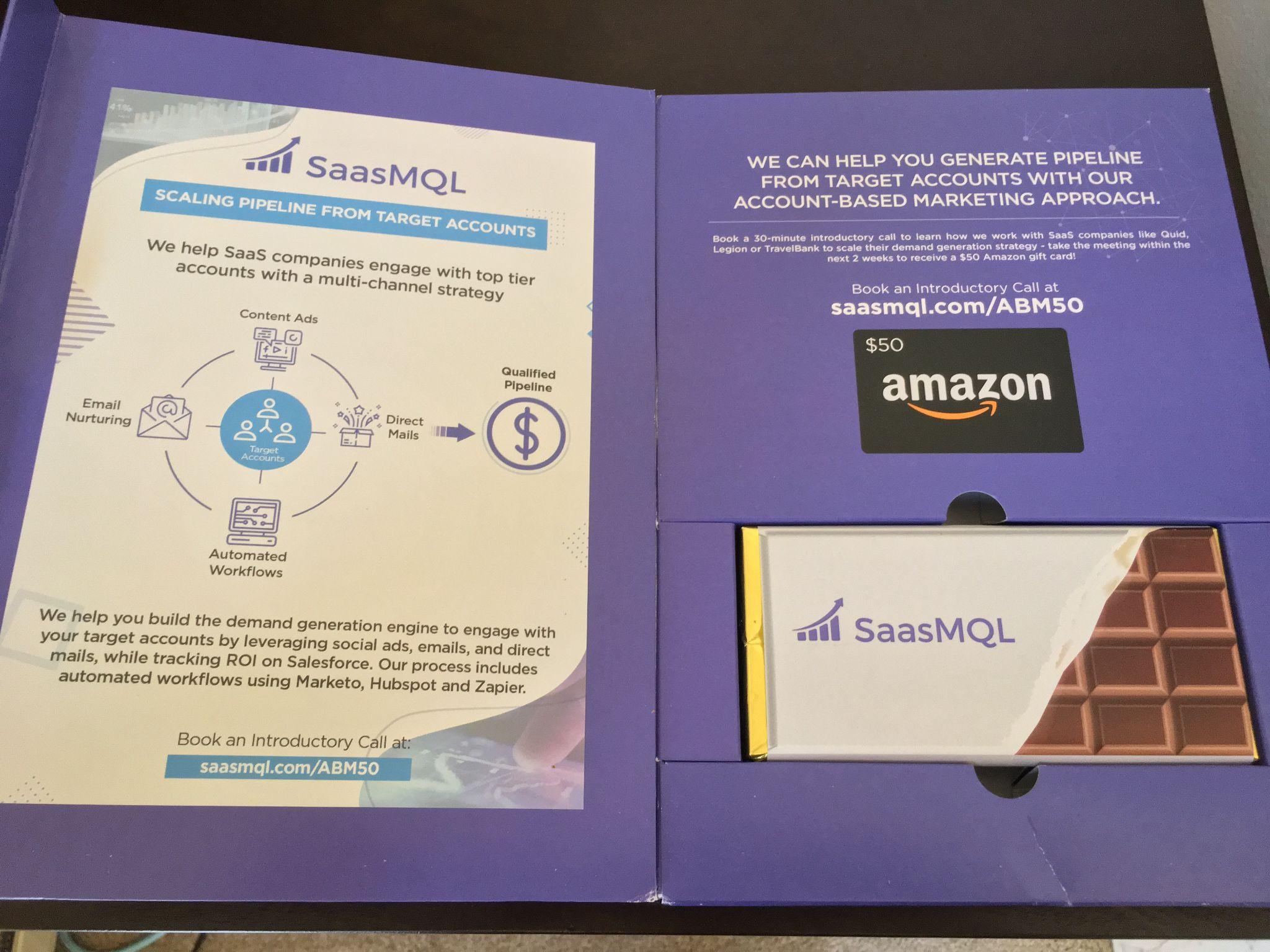
Two of our own campaigns illustrate this. In the first, the outside of the box read "We know the secret sauce for closing high-value accounts," next to a designed hot sauce bottle and our logo. Inside was a tray labeled "Turn the Heat Up!" with three real bottles of hot sauce, each with its own branding and headline ("Hotter Opportunities," "Hotter Traffic"). The theme carried through to the one-pager and the letter.

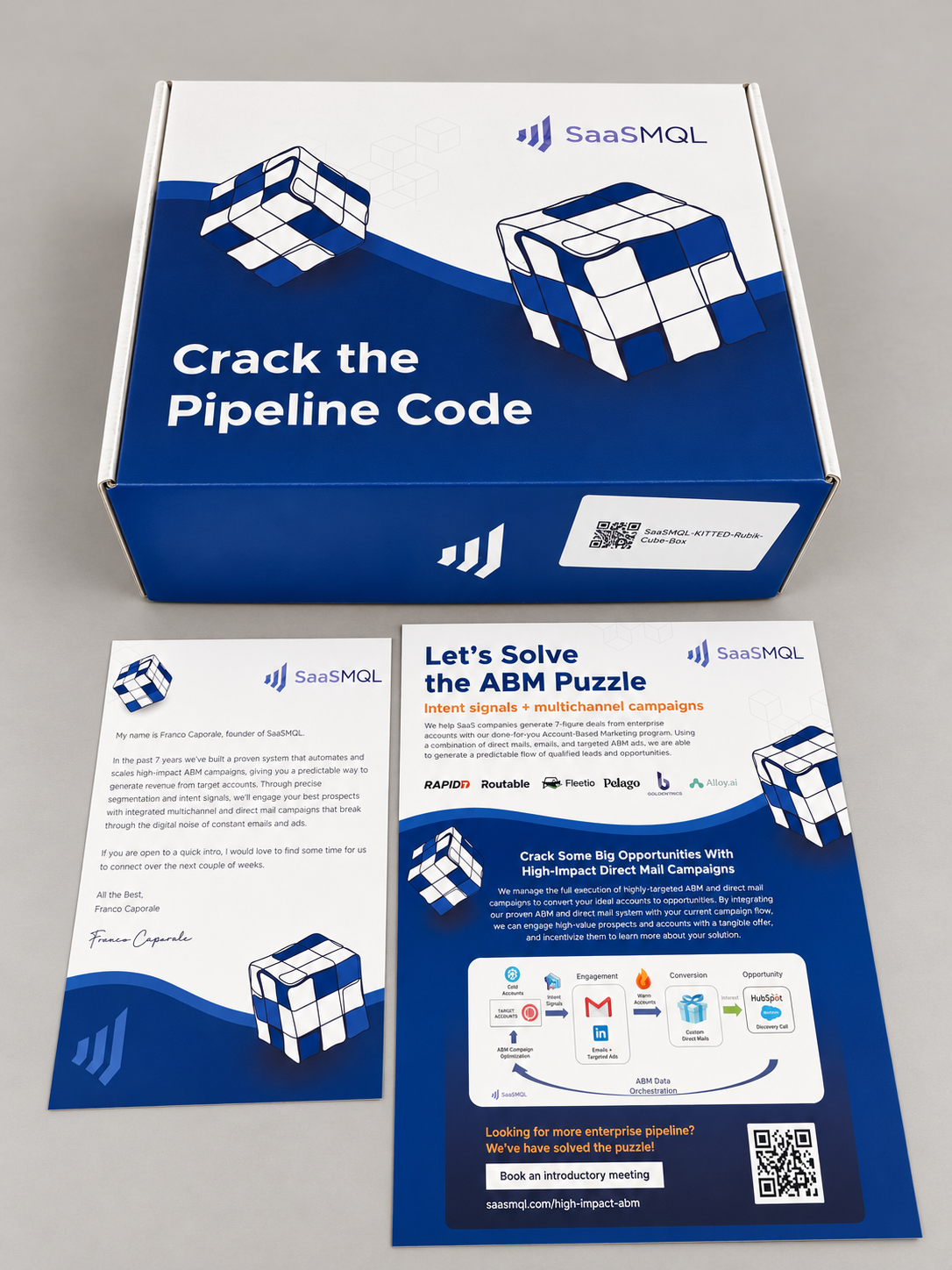
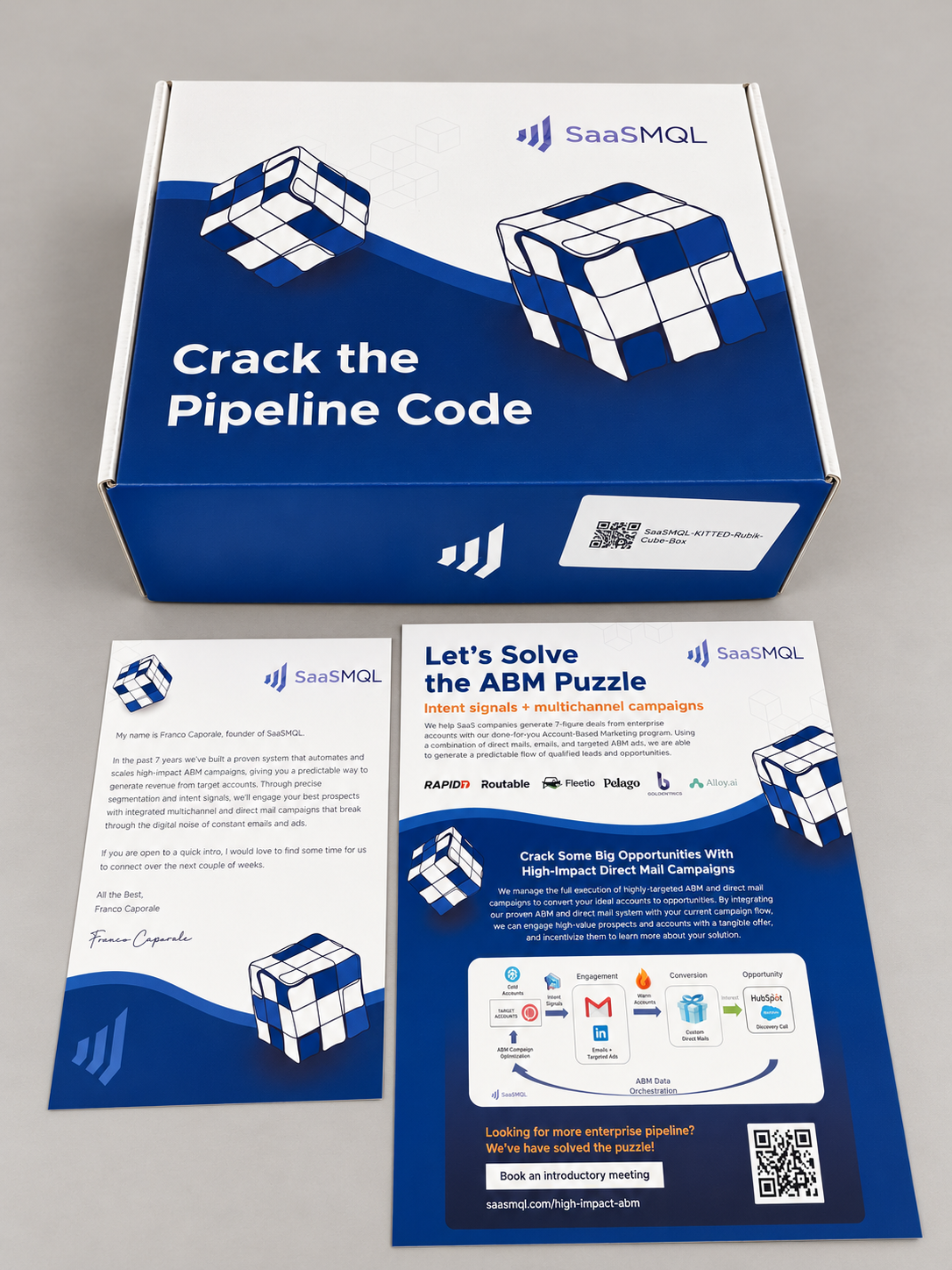
In another, built around the theme "Crack the Pipeline Code," we included a branded Rubik's Cube alongside a bag of “taralli”, a traditional Italian cracker. The cube played on cracking the code, and the inside of the lid closed the loop: "Don't let valuable enterprise opportunities turn into crumbles." The taralli are also a personal touch. I'm Italian, and I like to include something Italian in every campaign. That kind of personal signature makes a box feel like it came from a person rather than a brand.
In both cases the gift is just the vehicle; the experience and the message are the point.
It's worth being clear about what direct mail is trying to do. You're not trying to buy a meeting, you're trying to earn attention. Those are different goals, and they call for different spending.
We've seen a $50 box generate roughly three times the engagement of a $200 one. Part of the reason is physical: a large, well-branded box with a relevant headline gets noticed and opened, while a small box with an expensive item inside (a tablet or similar) often goes unnoticed. Doubling or tripling the cost of the gift tends to double or triple your campaign cost without a matching lift in engagement or pipeline.
The economics of direct mail are different from email, and that difference should shape how you handle your list. An invalid contact in a batch of 5,000 emails costs effectively nothing. An invalid contact in a direct mail campaign costs you the full price of the box every time, whether the issue is a wrong address, an outdated title, or someone who has since left the company.
You can't run direct mail on a list that's 20% inaccurate the way you might tolerate with email. Contact validation and clean data (correct person, current role, current company, accurate address) are directly tied to how much of your budget actually reaches a valid target.
In practice, this means every recipient is checked before a box is assigned. The example below is from our own Q1 2026 Rubik's Cube batch: each contact is tied to an account, has an ABM status showing they've already engaged, is assigned to a specific direct mail batch, and is marked as verified before anything ships.

A package that arrives with no prior context tends to underperform. It's more likely to reach a stale address, and even when it lands, an unexpected box from an unfamiliar company reads as odd.
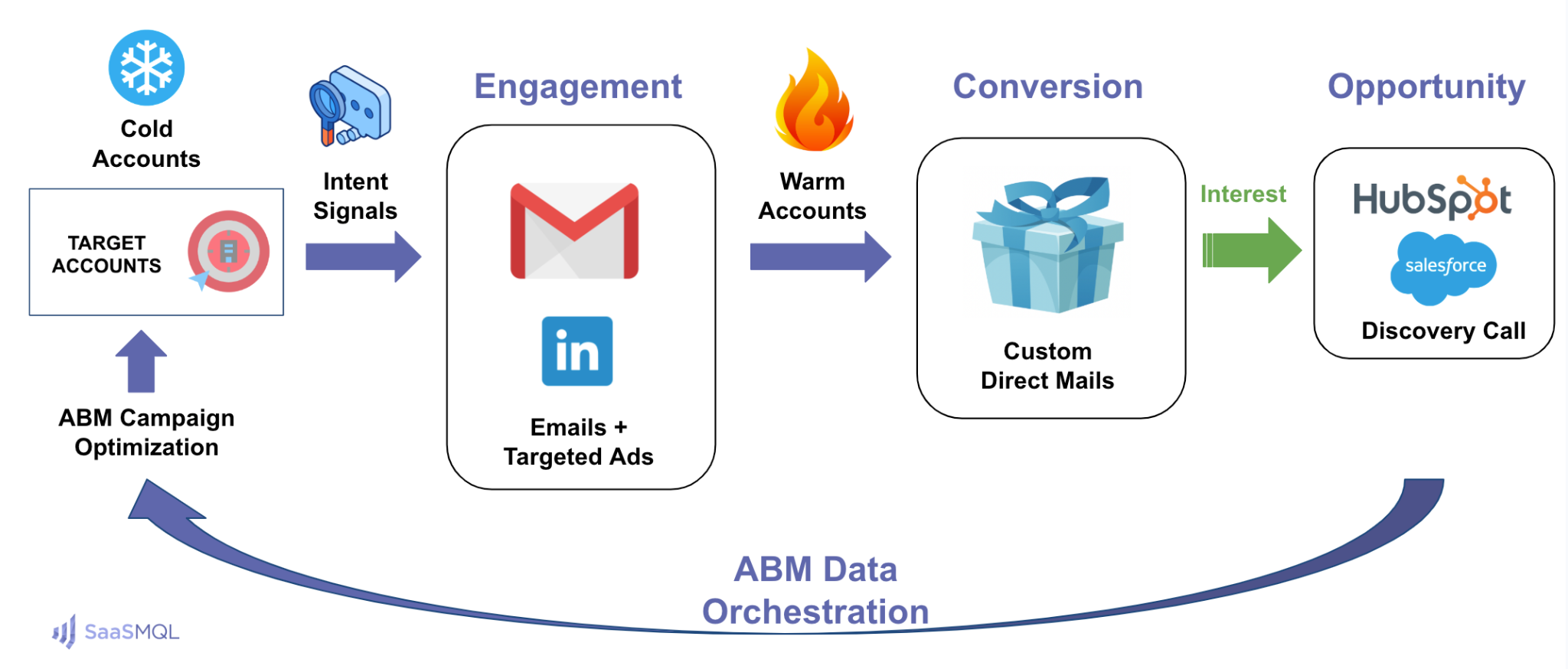
Direct mail works best as one step in a multi-channel sequence triggered by a real intent signal. For a contact you met at a trade show, that might be an email, then the package, then a follow-up email, then a call from an SDR. For an inbound signal, such as someone who downloaded a white paper, it might be an email, then the box, then continued follow-up.
We apply the same thinking to our own events. At trade shows, the booth carries the same campaign theme as the box, so a prospect who stops by and later receives the package sees one continuous story, not two unrelated touches.

Sending a package is easy, and on its own it means little. The orchestration around it is what creates value.
Alongside the gift, each box should contain elements that do specific work:
In the Rubik's Cube box, the inside of the lid explains the offer and carries the QR code, the letter comes signed by me, and the one-pager ends with a single ask, "Book an introductory meeting," pointing to a dedicated campaign page.

These are what connect the physical experience to a measurable next step.
The box being delivered is not the end of the campaign. In our experience, it's where most of the engagement actually begins.
Because of that, it's worth tracking every box to delivery, so you know whether it's in transit, delivered, or undeliverable. The moment it lands, that's the signal to begin following up: at minimum with an email sequence of several touches, and ideally alongside LinkedIn messages and calls. This is the sequence that converts, and each touch should reference the box directly.

It also pays to keep following up well past the first attempt. We've seen recipients respond two or three months later, because the timing wasn't right initially but the box kept the company in mind in a way an email rarely does. Continuing to follow up and retarget, and in some cases sending a second, different box later, turns a single package into an ongoing conversation.
Direct mail has a production timeline that's easy to underestimate. Custom, branded boxes commonly take four to five weeks to produce at volumes of 300 to 500, since everything is made to order. If you wait until a prospect takes an action to begin production, the moment has usually passed.
The practical answer is to keep inventory ready to ship, so that when a trigger fires, the box already exists. We've often had prospects who would have been perfect recipients, and no boxes on the shelf to send them. We recommend planning quarter by quarter: produce at the start of the quarter, launch the first campaign, and once it's running, begin planning the next, or keep going with a box that's already working.
The most common pattern we see is the one-off: a company has an idea (usually in Q4 around the holidays), ships 200 boxes, and considers the campaign complete. Direct mail tends to work better as an always-on workflow, running continuously with different tiers, concepts, and ideas mapped to each segment and stage of the funnel, each triggered by the right signal.
That model depends on the point above: it only runs if inventory is there to feed it. A one-off is an event; a workflow is part of the pipeline engine.
None of these principles works in isolation. A well-designed box sent to an unvalidated list, or a strong list with no follow-up sequence, will still underperform. The results come from running them together as one system: the right segment, clean data, a box built around a clear message, orchestrated outreach before and after delivery, and inventory ready to keep the workflow running.
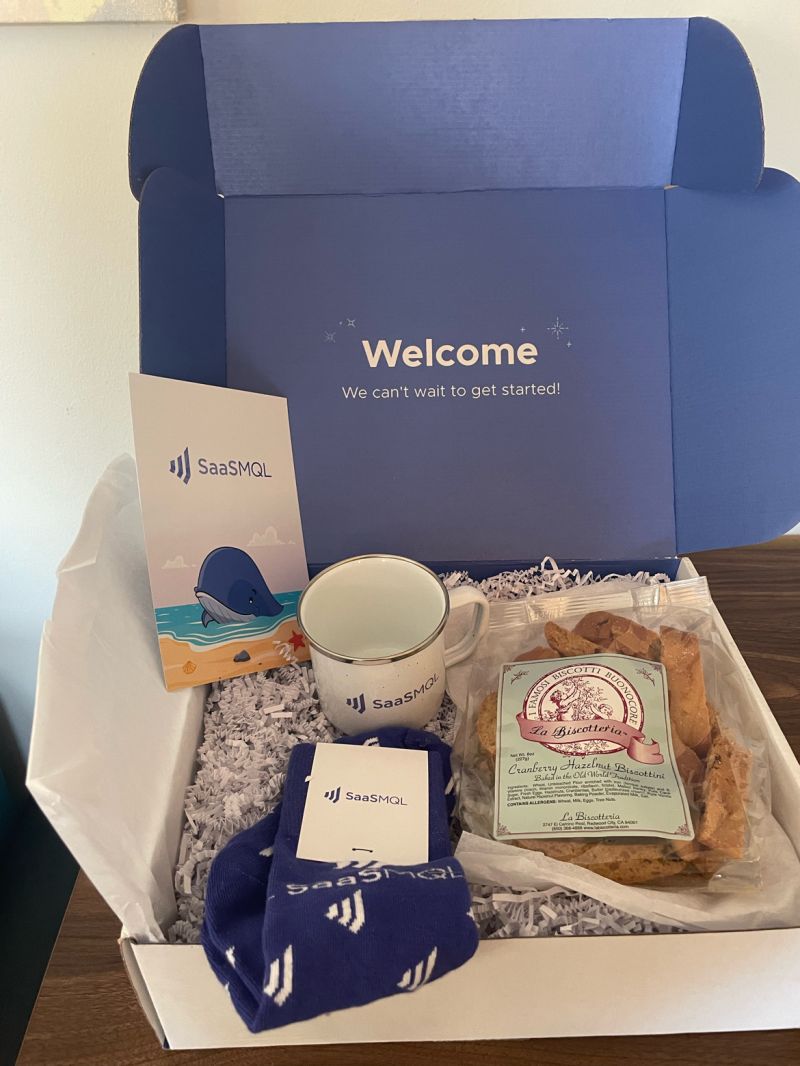
If you’d like to see how this works with your own target accounts, we can start with a focused pilot. Together we select your top accounts, agree on a specific pipeline goal, and build the direct mail campaign around it: the segment and buying group mapping, the box concept, contact validation, and the multi-channel sequence before and after delivery. We always target specific pipeline or account engagement goals for every ABM and direct mail program we run.

SaaSMQL is an Account-Based Marketing agency that helps SaaS companies scale recurring revenue with high-impact multichannel campaigns.

.png)
